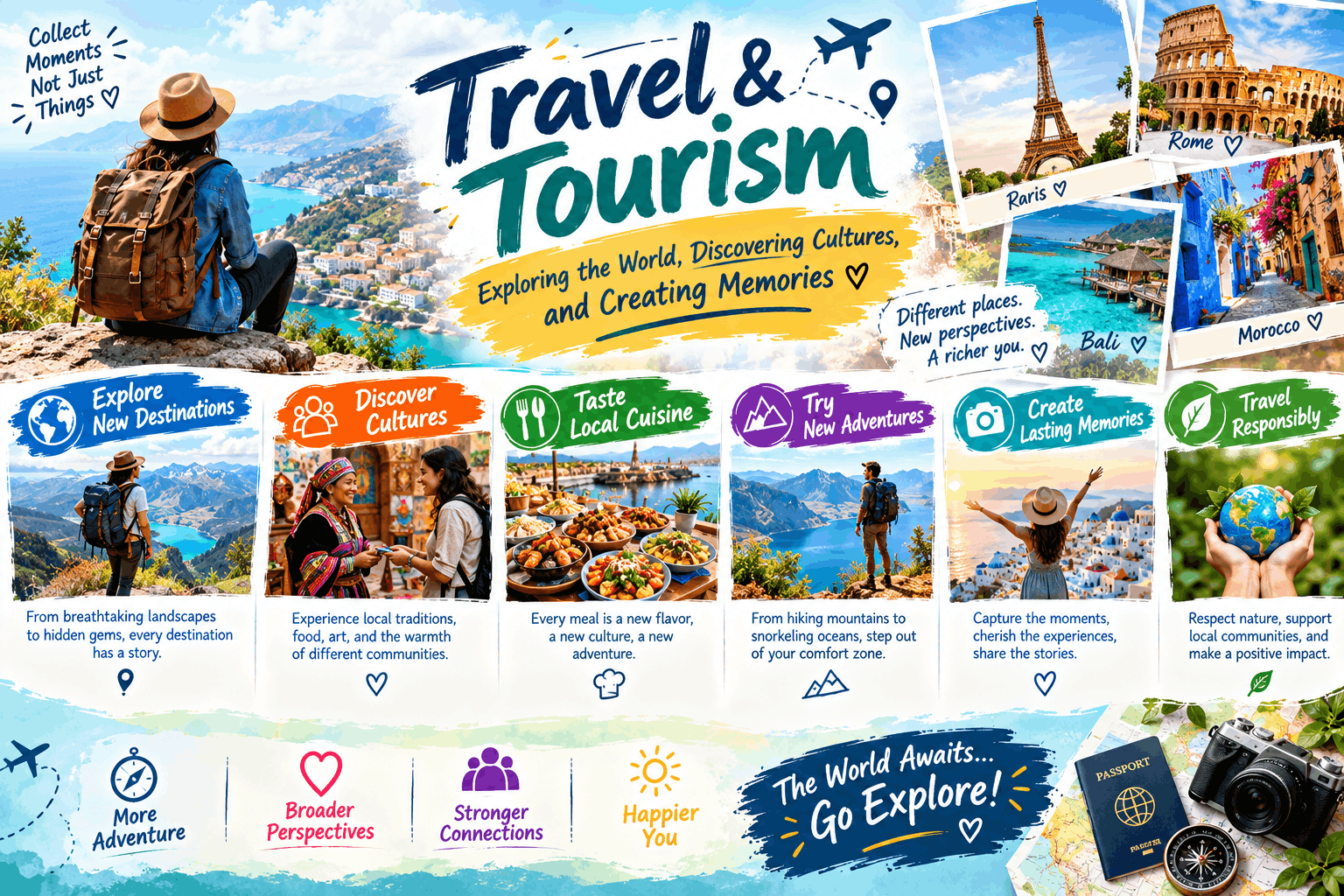
Travel and tourism have become an important part of modern life. People travel for many different reasons, including relaxation, adventure, business, education, family visits, cultural experiences, and personal discovery. Whether it is a weekend trip to a nearby destination or a long international journey, travel can provide opportunities to experience new places and create lasting memories.
Tourism also plays an important role in economies around the world. Hotels, restaurants, airlines, transportation companies, tour operators, local shops, museums, attractions, and many other businesses depend on travelers. In many destinations, tourism provides employment and supports local communities.
Modern travel has become more accessible because of improved transportation, online booking platforms, smartphones, digital maps, travel applications, and global communication. Travelers can research destinations, compare accommodation, plan itineraries, and share experiences from almost anywhere.
However, good travel is about more than visiting famous attractions. Responsible tourism means respecting local cultures, protecting the environment, supporting communities, and making thoughtful choices.
This guide explores the world of travel and tourism, from planning a trip and choosing destinations to understanding cultural experiences, sustainable tourism, technology, and the future of travel.
What Is Travel and Tourism?
Travel refers to moving from one location to another for a specific purpose. Tourism generally involves traveling away from one’s usual environment for leisure, business, recreation, or other temporary purposes.
Tourism can take many forms, including:
- Domestic tourism
- International tourism
- Adventure tourism
- Cultural tourism
- Ecotourism
- Beach tourism
- Medical tourism
- Business tourism
- Religious tourism
- Educational tourism
- Wildlife tourism
- Luxury tourism
- Rural tourism
Each type of tourism provides a different experience.
Some travelers prefer relaxing on beaches, while others enjoy hiking, exploring historical sites, visiting museums, tasting local food, or experiencing traditional festivals.
Why People Love to Travel
Travel provides an opportunity to break away from everyday routines.
A new destination can introduce travelers to different landscapes, languages, foods, traditions, and ways of life.
Travel can also provide personal experiences that are difficult to recreate at home. Watching a sunset over a famous landscape, exploring an ancient city, walking through a local market, or sharing a meal with people from another culture can become memorable experiences.
For many people, travel also provides relaxation. A vacation can create time away from work and everyday responsibilities.
Travel can also encourage curiosity. Visiting unfamiliar places often leads people to ask questions and learn about history, geography, culture, architecture, and local traditions.
Planning a Successful Trip
Good planning can make travel more comfortable and enjoyable.
The first step is choosing a destination based on the purpose of the trip.
Travelers should consider factors such as weather, budget, transportation, accommodation, local attractions, travel documents, and available activities.
Creating a basic itinerary can help organize the trip without making every minute rigid.
A flexible itinerary can provide structure while leaving room for unexpected discoveries.
It is also useful to research local customs and practical information before departure. Understanding transportation systems, common payment methods, cultural etiquette, and basic local phrases can make traveling easier.
Choosing the Right Destination
There are countless destinations around the world, and choosing one can be challenging.
Travelers can begin by identifying what they want from the trip.
Someone looking for relaxation might choose a beach or resort destination. An adventure traveler may prefer mountains, forests, deserts, or outdoor activity destinations.
History enthusiasts might prefer cities with museums, archaeological sites, monuments, and historic neighborhoods.
Food lovers may choose destinations known for distinctive cuisines and culinary traditions.
Budget is another important consideration. Some destinations may have relatively low accommodation and food costs but expensive transportation, while others may have affordable flights but higher local expenses.
Budget Travel
Travel does not always need to be expensive.
Budget travelers can reduce costs by comparing transportation options, choosing affordable accommodation, traveling during less busy periods, preparing some meals themselves, and prioritizing free or low-cost attractions.
Public transportation can sometimes be less expensive than taxis or private transfers.
Travelers can also create a daily spending limit to keep expenses under control.
Budget travel does not necessarily mean having a poor experience. Many memorable experiences, such as walking through historic neighborhoods, visiting public parks, exploring local markets, or enjoying natural scenery, can be inexpensive or free.
Luxury Travel
Luxury tourism focuses on comfort, personalized services, premium accommodation, exclusive experiences, and convenience.
Luxury travelers may choose high-end hotels, private transportation, fine dining, wellness resorts, private tours, or customized itineraries.
Technology has also influenced luxury travel. Hotels and travel companies can increasingly personalize experiences based on guest preferences.
Luxury travel is not limited to expensive accommodation. For some travelers, luxury means privacy, peaceful surroundings, exceptional service, or having more time rather than simply spending more money.
Cultural Tourism
Cultural tourism allows travelers to learn about the traditions and history of different communities.
Museums, historical sites, festivals, architecture, music, art, food, crafts, and traditional ceremonies can all be part of cultural travel.
Respect is essential when participating in cultural tourism.
Travelers should learn about local customs and avoid treating cultural traditions merely as entertainment.
Buying locally made crafts, eating at locally owned restaurants, hiring local guides, and participating respectfully in community experiences can also help support local economies.
Adventure Tourism
Adventure tourism appeals to travelers looking for active and exciting experiences.
Activities may include:
- Hiking
- Mountain climbing
- Cycling
- Rafting
- Camping
- Diving
- Kayaking
- Zip-lining
- Wildlife exploration
- Desert excursions
Adventure activities can provide memorable experiences, but safety should always be considered.
Travelers should understand the difficulty of an activity, use appropriate equipment, follow local safety instructions, and choose qualified guides when necessary.
Preparation is particularly important for activities involving remote locations or challenging environments.
Nature and Ecotourism
Natural destinations attract millions of travelers who want to experience forests, mountains, lakes, rivers, deserts, coastlines, and wildlife.
Ecotourism emphasizes responsible interaction with natural environments.
Responsible travelers can help protect destinations by avoiding litter, respecting wildlife, staying on designated paths, reducing unnecessary waste, and following local conservation rules.
Tourism can provide financial support for conservation when managed responsibly.
However, large numbers of visitors can also place pressure on ecosystems. Sustainable tourism therefore requires careful planning by travelers, businesses, communities, and authorities.
Food and Culinary Tourism
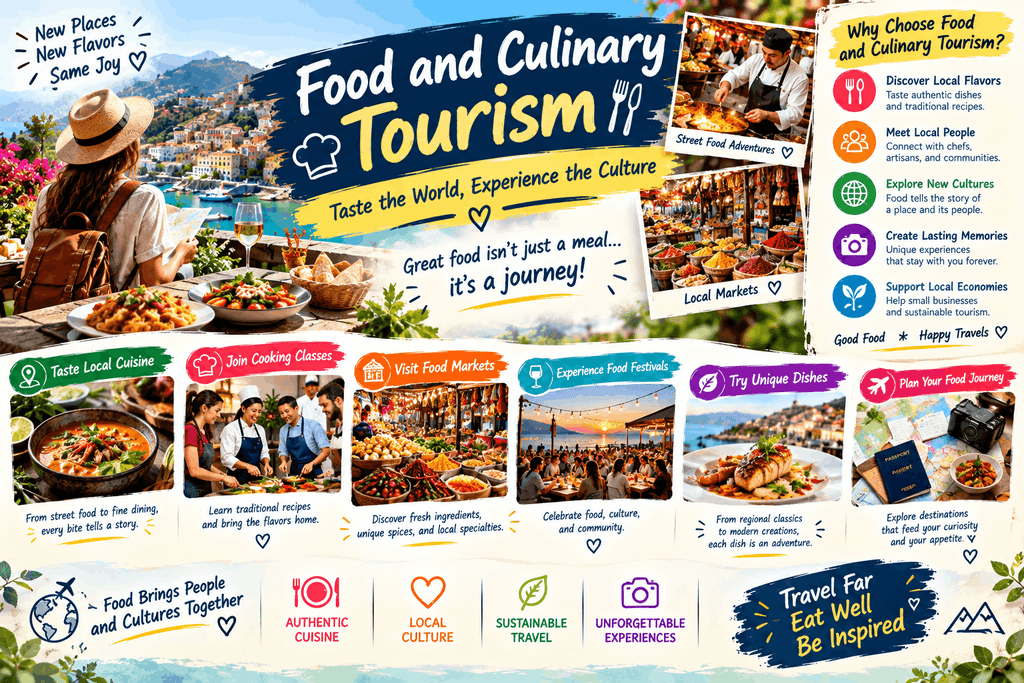
Food is one of the most enjoyable ways to experience a destination.
Local cuisine reflects geography, history, culture, agriculture, and tradition.
Travelers can explore local food through markets, restaurants, cooking classes, food tours, bakeries, street-food areas, and traditional dining experiences.
Trying regional dishes can introduce travelers to ingredients and cooking methods they may not encounter at home.
Food tourism can also support local businesses and producers.
Travelers should consider food safety and personal dietary requirements while exploring unfamiliar cuisine.
Family Travel
Traveling with family can create shared memories and provide opportunities to explore together.
Family trips require additional planning because different age groups may have different needs.
Parents and caregivers may need to consider accommodation, transportation, meal options, activities, rest periods, and child-friendly facilities.
A balanced itinerary can help prevent children and adults from becoming exhausted.
Family travel does not need to include expensive attractions every day. Parks, beaches, museums, nature walks, local markets, and cultural experiences can all be enjoyable depending on the destination.
Solo Travel
Solo travel has become increasingly popular.
Traveling alone allows individuals to control their schedules and choose activities based on personal interests.
Solo travelers can decide when to wake up, where to eat, which attractions to visit, and how long to stay in a particular location.
However, solo travel requires careful planning.
Travelers should research destinations, keep important documents secure, share basic itinerary information with someone they trust, and remain aware of their surroundings.
Choosing reputable accommodation and transportation can also contribute to a smoother experience.
Travel Technology
Technology has transformed the travel experience.
Smartphones can provide access to maps, translation tools, digital tickets, accommodation information, weather updates, transportation schedules, and travel guides.
Travelers can use online services to compare flights and hotels, research attractions, read reviews, and create itineraries.
Digital payments have also made transactions easier in many destinations.
However, travelers should avoid becoming completely dependent on technology. Keeping important information available offline and carrying backup payment options can be useful when internet access or battery power is limited.
Sustainable Tourism
Sustainability is becoming increasingly important in the tourism industry.
Travel can create economic opportunities, but it can also produce environmental and social challenges.
Responsible tourism aims to reduce negative effects while increasing benefits for local communities and environments.
Travelers can make more sustainable choices by:
- Supporting local businesses
- Reducing unnecessary waste
- Avoiding damage to natural environments
- Respecting wildlife
- Using public transportation when practical
- Choosing accommodations with responsible practices
- Conserving water and energy
- Respecting local communities and cultural traditions
Small decisions can contribute to more responsible travel.
Supporting Local Communities
Tourism can provide income for local residents when travelers spend money within communities.
Eating at locally owned restaurants, purchasing locally made products, booking local guides, and staying at locally operated accommodation can help keep more tourism revenue within the destination.
Travelers should also be aware that communities are not simply attractions.
Respecting residents, following local rules, avoiding excessive noise, and asking permission before photographing people are examples of considerate travel behavior.
Travel Safety
Safety should be part of every travel plan.
Before traveling, people should research destination-specific information, understand entry requirements, protect important documents, and consider appropriate travel insurance.
Travelers should keep copies of important documents and use secure storage for passports, money, and other valuables.
It is also useful to understand local emergency services and basic health considerations.
When participating in activities, travelers should follow professional instructions and avoid unnecessary risks.
Travel During Different Seasons
The time of year can significantly affect a travel experience.
Some destinations are most popular during warm weather, while others are attractive during winter.
Peak travel seasons can bring larger crowds and higher prices. Traveling during shoulder or off-peak periods may provide lower costs and quieter attractions, although weather conditions may be less predictable.
Before booking a trip, travelers should research seasonal weather, holidays, festivals, and local events.
Photography and Travel Memories
Photography has become a major part of modern travel.
Smartphones and digital cameras allow travelers to capture landscapes, architecture, food, people, and memorable moments.
However, travelers should remember to experience destinations rather than viewing everything through a camera.
When photographing people, especially in culturally sensitive settings, asking permission is respectful.
The best travel memories are not always photographs. Conversations, sounds, tastes, and personal experiences can be just as meaningful.
The Economic Importance of Tourism
Tourism contributes significantly to many local and national economies.
Hotels, restaurants, transportation providers, tour operators, entertainment venues, retailers, museums, and other businesses can benefit from visitor spending.
Tourism can also create direct and indirect employment.
However, destinations need to manage tourism carefully. Rapid growth can create pressure on housing, infrastructure, natural resources, and local communities.
Sustainable tourism planning can help destinations capture economic benefits while reducing negative effects.
The Future of Travel and Tourism
The future of travel is likely to be influenced by technology, sustainability, changing consumer preferences, and new forms of transportation.
Artificial intelligence may help travelers plan personalized itineraries, find suitable activities, translate languages, and manage travel information.
Virtual and augmented reality may allow people to preview destinations or experience digital versions of cultural attractions.
At the same time, travelers may increasingly seek authentic experiences, local connections, wellness activities, nature-based trips, and environmentally responsible options.
The tourism industry will need to adapt while balancing convenience with sustainability.
How to Make Every Trip More Meaningful
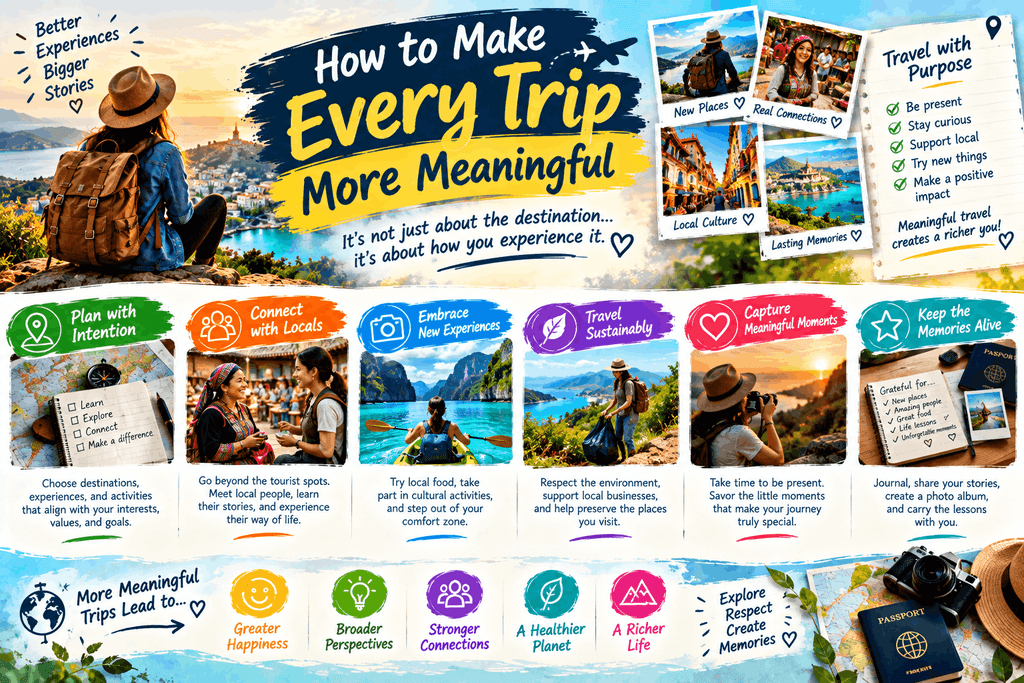
A meaningful trip does not depend entirely on how far you travel or how much money you spend.
Travelers can make experiences more memorable by slowing down, exploring beyond major tourist attractions, speaking with local people, trying regional food, learning about history, and spending time in natural surroundings.
Rather than trying to visit as many attractions as possible, travelers can focus on experiencing a destination.
Keeping a travel journal can also be a meaningful way to record memories, observations, and lessons learned.
Conclusion
Travel and tourism provide opportunities to explore new places, experience different cultures, discover nature, enjoy local food, meet new people, and create lasting memories.
A successful journey begins with thoughtful planning but should also leave room for discovery. Whether traveling alone, with family, for business, or for adventure, understanding the destination can make the experience more enjoyable.
Modern technology has made travel more accessible and convenient, but responsible travel requires more than booking a flight and hotel. Travelers should respect local communities, protect natural environments, support local businesses, and make informed decisions.
The future of tourism will depend on finding a balance between exploration and responsibility.
Ultimately, travel is about more than reaching a destination. It is about the experiences gained along the way, the perspectives discovered, the people encountered, and the memories created. With thoughtful planning and responsible choices, travel can become one of the most rewarding ways to learn about the world and broaden our understanding of life.