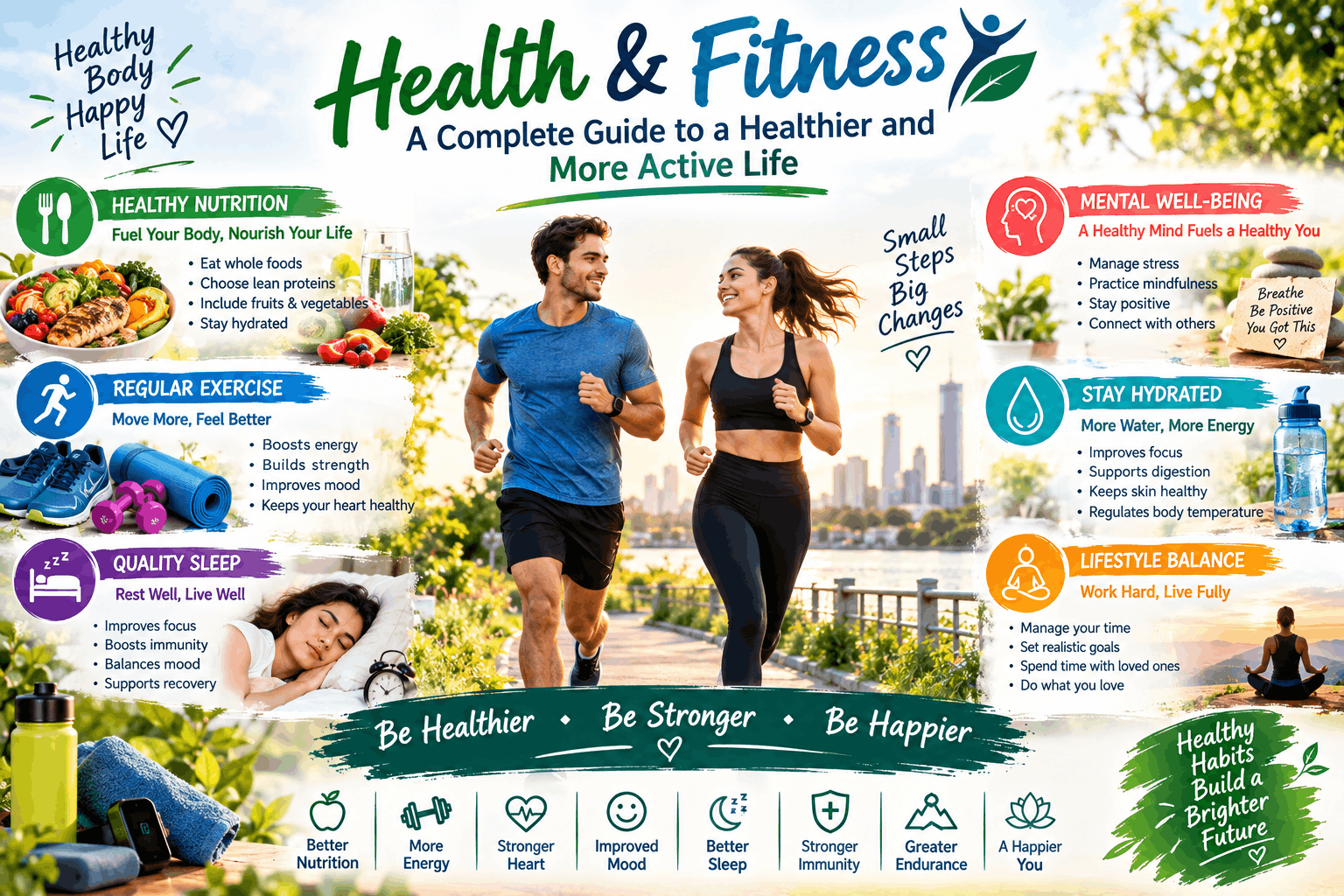
Health and fitness are important parts of living a balanced and productive life. In today’s busy world, people often spend long hours working, studying, traveling, or using digital devices. As a result, physical activity, healthy eating, quality sleep, and mental well-being can sometimes be overlooked.
Taking care of your health does not require making dramatic changes overnight. Small, consistent habits can make a meaningful difference over time. Regular physical activity, nutritious food, sufficient sleep, stress management, and healthy daily routines can support overall well-being.
Fitness is also about more than appearance. Being physically active can help improve strength, endurance, mobility, energy levels, and the ability to perform everyday activities. A healthy lifestyle can also support mental and emotional well-being.
This guide explores the key areas of health and fitness and provides practical ideas for developing healthier habits that can fit into everyday life.
What Is Health and Fitness?
Health is a broad concept that includes physical, mental, and emotional well-being. Fitness generally refers to the body’s ability to perform physical activities effectively and recover from them.
Physical fitness includes several components, such as cardiovascular endurance, muscular strength, muscular endurance, flexibility, balance, coordination, and body composition.
Good health is not simply the absence of illness. It also involves maintaining habits that support the body and mind.
A healthy lifestyle can look different for different people. Someone who works at a desk may need to focus on moving more throughout the day, while someone who performs physically demanding work may need to prioritize recovery and adequate nutrition.
The most effective health and fitness routine is one that is realistic, sustainable, and appropriate for an individual’s circumstances.
Why Regular Exercise Matters
Exercise is one of the foundations of physical fitness. Regular movement helps the body remain strong and functional.
Physical activity can include many different forms of movement. Walking, cycling, swimming, running, dancing, sports, strength training, stretching, and recreational activities can all contribute to an active lifestyle.
Exercise can help improve cardiovascular fitness and muscular strength. It can also support mobility and physical independence as people get older.
Regular activity may also provide mental benefits. Exercise can offer a break from daily responsibilities and provide an opportunity to spend time outdoors, socialize, or simply focus on movement.
The important thing is consistency. A person does not necessarily need to spend hours in a gym to become more active. Walking more frequently, taking stairs when appropriate, doing short home workouts, or participating in enjoyable recreational activities can all contribute to an active lifestyle.
Cardiovascular Fitness
Cardiovascular exercise involves activities that increase the body’s demand for oxygen and make the heart and lungs work harder.
Common examples include:
- Brisk walking
- Jogging
- Running
- Cycling
- Swimming
- Dancing
- Hiking
- Aerobic exercise
- Sports
Cardiovascular activity can help improve endurance, allowing people to perform physical activities for longer periods.
Beginners can start gradually. Someone who is not accustomed to exercise may begin with short walks and slowly increase duration or intensity as their fitness improves.
Enjoyment is also important. A form of exercise that someone likes is often easier to maintain than a routine that feels unpleasant or overly demanding.
Strength Training
Strength training focuses on making muscles work against resistance. Resistance can come from weights, resistance bands, machines, or bodyweight exercises.
Common bodyweight exercises include squats, lunges, push-ups, and certain forms of core training.
Strength training can support muscle development, physical function, bone health, and everyday movement. Strong muscles can make tasks such as carrying groceries, climbing stairs, lifting objects, and maintaining posture easier.
Beginners should focus on learning proper movement patterns rather than immediately trying to lift very heavy weights.
A gradual approach allows the body to adapt. Increasing resistance, repetitions, or training volume over time can provide progressive challenges.
People with injuries, medical conditions, or specific health concerns should seek appropriate professional guidance before beginning a new exercise program.
Flexibility and Mobility
Flexibility refers to the ability of muscles and joints to move through a range of motion. Mobility involves the ability to control movement through that range.
Stretching and mobility exercises can be useful components of a balanced fitness routine.
Simple movements such as gentle stretches, controlled joint movements, yoga, and mobility exercises can help people maintain physical movement.
Flexibility needs vary between individuals. The goal should not necessarily be to become extremely flexible but to maintain comfortable and functional movement.
Stretching can be incorporated after exercise or during separate mobility sessions. Movements should generally be controlled rather than forced.
The Importance of Walking
Walking is one of the simplest ways to increase daily physical activity.
It requires little equipment and can be adapted to many fitness levels. People can walk outdoors, use a treadmill, walk during breaks, or incorporate short walks into their daily routines.
Walking can also provide an opportunity to spend time outside and take a break from screens.
For people who currently have low activity levels, increasing walking gradually can be a practical starting point. Instead of focusing immediately on a large target, individuals can look for opportunities to move more throughout the day.
Healthy Nutrition
Exercise is only one part of a healthy lifestyle. Nutrition plays an equally important role.
A balanced diet provides the body with energy and nutrients needed for daily activities, recovery, and normal body functions.
A healthy eating pattern can include a variety of foods such as vegetables, fruits, whole grains, legumes, lean sources of protein, nuts, seeds, and other nutrient-rich foods.
The exact nutritional needs of each person can vary based on factors such as age, activity level, body size, goals, and health circumstances.
Rather than focusing on a single “perfect” food, it is generally more useful to consider the overall quality and variety of the diet.
Protein and Muscle Health
Protein is an important nutrient involved in maintaining and repairing body tissues. It is particularly relevant for people who participate in strength training and other forms of physical activity.
Protein can be obtained from foods such as eggs, fish, poultry, dairy products, beans, lentils, peas, tofu, nuts, and seeds.
People following different dietary patterns can find suitable protein sources within their preferred foods.
A balanced diet should include a variety of nutrients rather than focusing exclusively on protein. Carbohydrates, fats, vitamins, minerals, fiber, and fluids also play important roles in overall nutrition.
Fruits and Vegetables

Fruits and vegetables provide vitamins, minerals, fiber, and other naturally occurring compounds.
Eating a variety of colorful fruits and vegetables can help provide a broad range of nutrients.
Fresh, frozen, and appropriately prepared options can all contribute to a healthy eating pattern.
Adding vegetables to meals, keeping fruit available for snacks, and including different types of produce throughout the week are simple ways to increase variety.
Hydration and Exercise
Water is essential for normal body function. Physical activity and hot weather can increase fluid requirements because the body loses water through sweating.
Drinking fluids regularly throughout the day can help maintain hydration.
During longer or more intense physical activities, especially in hot environments, fluid and electrolyte needs can vary. Individual circumstances and exercise conditions should be considered.
Instead of relying solely on thirst during demanding activities, people can pay attention to their body’s signals, exercise conditions, and personal needs.
Sleep and Recovery
Exercise places stress on the body, and recovery gives the body an opportunity to adapt.
Sleep is an important part of recovery. Consistently getting adequate, quality sleep can support physical performance, concentration, mood, and daily functioning.
A regular sleep schedule can help establish healthy routines. Creating a comfortable sleeping environment and reducing unnecessary distractions before bedtime may also be useful.
Recovery does not mean avoiding all movement. Light activity, gentle walking, stretching, and rest days can be incorporated depending on the training routine.
People who exercise intensely should pay attention to signs of excessive fatigue and allow appropriate recovery.
Managing Stress
Stress is a normal part of life, but persistent stress can affect overall well-being.
Healthy stress-management strategies vary from person to person. Exercise, walking outdoors, hobbies, social connection, relaxation techniques, breathing exercises, journaling, and adequate sleep can all be useful tools.
It is also important to identify sources of unnecessary stress where possible. Setting realistic priorities, organizing tasks, taking breaks, and maintaining boundaries can help create a more balanced routine.
Mental well-being should be treated as an important part of overall health rather than something separate from physical fitness.
Building a Sustainable Fitness Routine
One of the biggest challenges in fitness is consistency.
Many people begin with ambitious goals and exercise intensely for a short period before losing motivation. A more sustainable approach is to create a routine that fits naturally into everyday life.
For example, a beginner might start with several short walking sessions each week and gradually introduce strength training.
A basic weekly routine could include cardiovascular activity, strength exercises, mobility work, and recovery days.
The exact structure should depend on the person’s fitness level, schedule, goals, and individual circumstances.
The best routine is often the one that can realistically be maintained for months and years.
Setting Realistic Fitness Goals
Clear goals can help people stay focused.
Fitness goals might include improving endurance, increasing strength, becoming more active, completing a specific activity, improving mobility, or establishing a consistent exercise routine.
Goals should be realistic and measurable when possible.
Instead of saying, “I want to become healthier,” someone could set a practical goal such as walking regularly each week or completing a certain number of strength-training sessions.
Progress should be evaluated over time rather than judged from one day or one workout.
Everyone experiences periods of low motivation, busy schedules, or setbacks. A missed workout does not mean that a fitness journey has failed.
Fitness at Home
A gym is not required for every fitness routine.
Home workouts can be effective when they are structured appropriately. Bodyweight exercises, resistance bands, adjustable weights, yoga, and online exercise programs provide many possibilities.
A small space can be enough for exercises such as squats, lunges, push-ups, planks, and mobility movements.
Home workouts can be particularly useful for people with busy schedules because they eliminate travel time.
However, proper technique remains important. Beginners should learn exercises carefully and avoid movements that cause pain.
Staying Active at Work
Modern work often involves sitting for long periods.
People who work at desks can look for opportunities to break up extended periods of sitting. Short walks, standing during certain tasks, stretching during breaks, and moving around the workplace can add activity throughout the day.
A person’s entire daily movement pattern matters, not just the time spent exercising.
Simple habits, such as walking while taking phone calls or choosing stairs when practical, can contribute to overall activity.
The Role of Technology in Fitness
Technology has changed the way people track and manage their health and fitness.
Smartwatches and fitness trackers can monitor activities such as steps, workouts, heart rate, and sleep-related measurements.
Fitness applications can provide workout programs, exercise demonstrations, meal-planning tools, and progress tracking.
Technology can be helpful for motivation and organization, but it should not become a source of unnecessary pressure.
Numbers and fitness metrics are tools rather than complete measures of health. How a person feels, functions, sleeps, and performs daily activities also matters.
Avoiding Extreme Diets and Fitness Trends
The health and fitness industry contains many trends that promise rapid results.
Extreme diets, excessive exercise, and unrealistic transformation programs may not be sustainable.
Healthy progress generally takes time. Sustainable nutrition and regular physical activity are more practical long-term strategies than repeatedly following extreme programs.
People should also be cautious about supplements or products that make dramatic health or weight-loss claims.
A qualified healthcare professional or registered nutrition professional can provide individualized advice when needed.
Creating Healthy Habits for the Long Term
Healthy living is built through repeated behaviors.
Some useful habits include:
- Eating a variety of nutritious foods
- Staying physically active
- Getting adequate sleep
- Drinking enough fluids
- Taking regular movement breaks
- Managing stress
- Spending time with supportive people
- Limiting harmful habits
- Making time for enjoyable activities
- Scheduling appropriate medical and dental care
The goal is not perfection.
A healthy lifestyle should leave room for normal life, celebrations, rest, and occasional less-healthy choices. Consistency over time is more important than trying to follow an impossible standard every day.
Health and Fitness for Different Ages
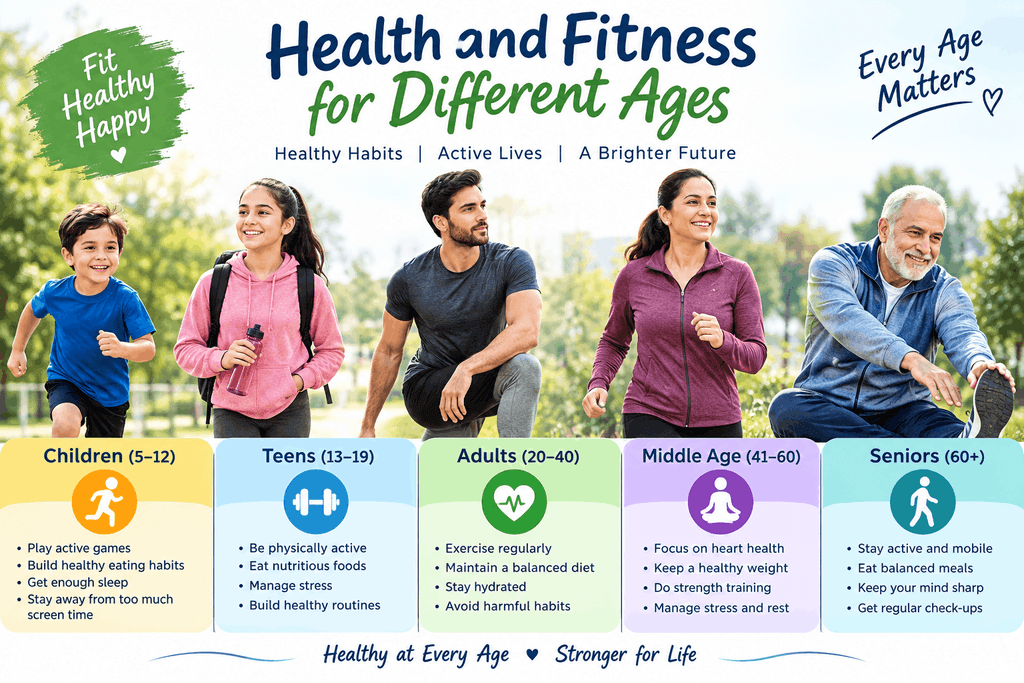
Fitness needs change throughout life.
Children and teenagers benefit from regular movement, play, sports, and age-appropriate physical activities.
Adults may need to balance exercise with work, family responsibilities, and other commitments.
Older adults can benefit from activities that support strength, balance, flexibility, mobility, and independence.
Exercise programs should be adapted to individual abilities and circumstances. Older adults or people with health conditions may benefit from discussing exercise plans with an appropriate healthcare professional.
The Connection Between Physical and Mental Well-Being
Physical and mental health are closely connected.
Exercise can provide opportunities for social interaction, outdoor activity, personal achievement, and stress management. Similarly, mental well-being can influence motivation, sleep, eating habits, and willingness to exercise.
A balanced health strategy therefore considers the whole person.
Taking care of physical health while also making time for rest, relationships, hobbies, and emotional well-being can support a more balanced lifestyle.
Conclusion
Health and fitness are not short-term projects. They are ongoing parts of everyday life.
Regular physical activity, balanced nutrition, adequate sleep, hydration, stress management, and recovery can all contribute to overall well-being. The most effective approach is usually one that is realistic, enjoyable, and sustainable.
You do not need to completely change your lifestyle in a single day. Small improvements can build into meaningful habits over time. A daily walk, a nutritious meal, an earlier bedtime, a short workout, or a few minutes of stretching can be a useful step toward a healthier routine.
Fitness is also about more than appearance. It is about having the strength, energy, mobility, and endurance to participate in the activities that matter to you.
As you develop your own health and fitness routine, focus on consistency rather than perfection. Listen to your body, make gradual changes, and seek professional guidance when your individual health circumstances require it.
A healthier lifestyle is built one choice at a time, and the habits developed today can contribute to better physical and mental well-being for years to come.