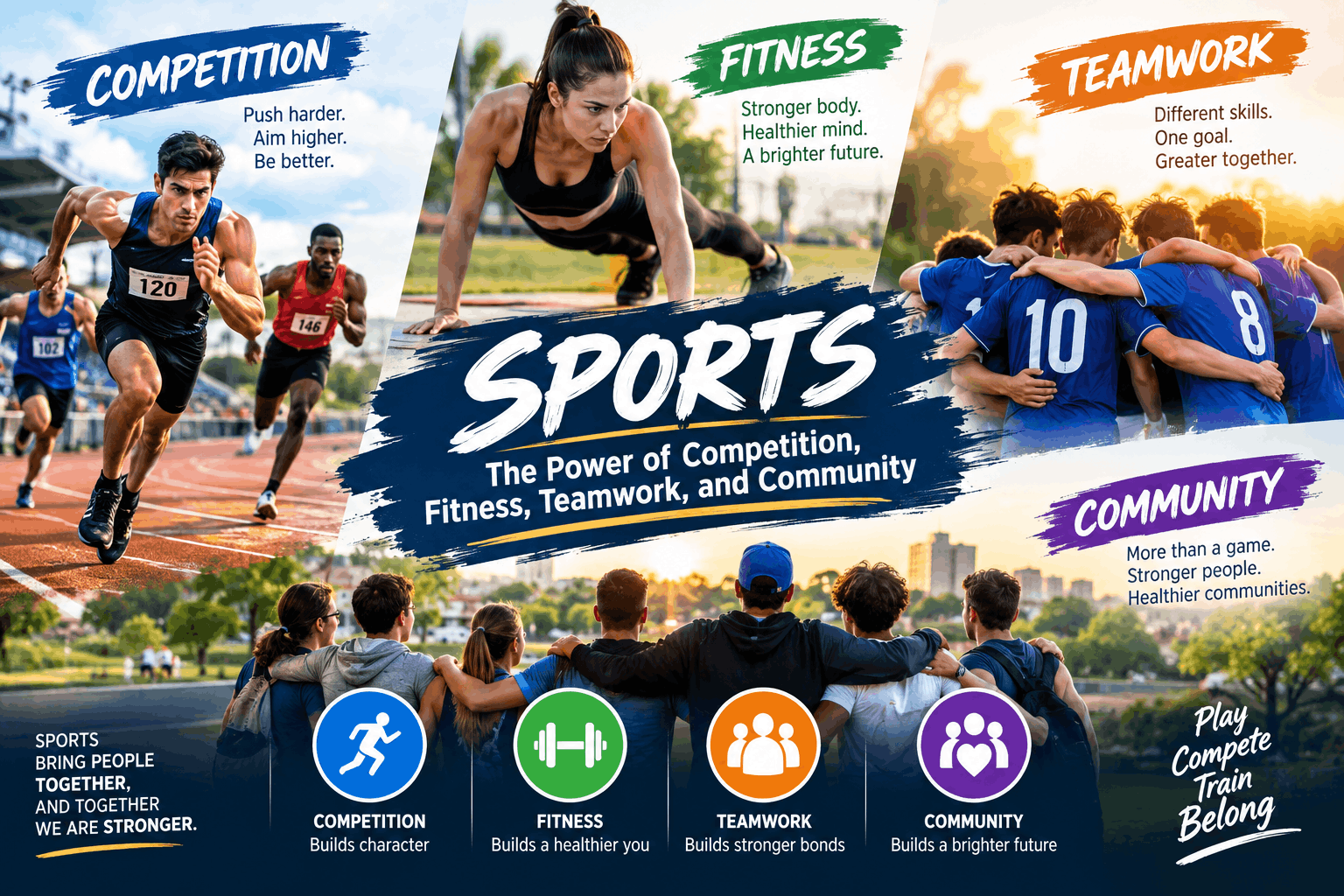
Sports have been an important part of human culture for centuries. From traditional games played in local communities to major international competitions watched by millions of people, sports bring together physical activity, competition, entertainment, discipline, and social connection.
People participate in sports for many different reasons. Some enjoy competition, while others play simply to stay active, make friends, develop skills, or have fun. Sports can be played individually or as part of a team, indoors or outdoors, professionally or recreationally.
Today, sports are also a major global industry. Professional leagues, international tournaments, athletes, broadcasters, sponsors, sports brands, stadiums, and digital platforms have created a vast ecosystem around athletic competition.
Technology has transformed sports as well. Athletes use advanced equipment and performance analysis, coaches use data to develop strategies, and fans can follow games through television, streaming services, websites, and mobile applications.
This article explores the importance of sports, popular sporting activities, physical and social benefits, professional competition, technology, youth participation, sports culture, and the future of athletics.
What Are Sports?
Sports are organized or informal physical activities that involve skill, movement, competition, recreation, or exercise.
Sports can be divided into many categories, including:
- Team sports
- Individual sports
- Indoor sports
- Outdoor sports
- Water sports
- Winter sports
- Combat sports
- Motor sports
- Adventure sports
- Recreational activities
Popular sports include football, cricket, basketball, tennis, volleyball, athletics, swimming, cycling, hockey, baseball, badminton, and many others.
Each sport has its own rules, equipment, techniques, and traditions.
Why Sports Are Important
Sports provide opportunities for people to remain physically active while developing skills and social connections.
Regular participation can support cardiovascular fitness, strength, coordination, flexibility, balance, and general physical function.
Sports can also encourage discipline and persistence. Learning a new skill often requires repeated practice, patience, and the ability to learn from mistakes.
For children and young people, sports can provide opportunities to develop teamwork, communication, responsibility, and confidence.
For adults, sports can provide recreation, social interaction, stress relief, and an enjoyable way to remain active.
Football and Global Sports Culture
Football is one of the world’s most widely followed sports.
The sport is played in countries across many continents and has developed a strong cultural identity around clubs, national teams, stadiums, rivalries, tournaments, and supporters.
Football requires teamwork, coordination, tactical awareness, physical fitness, and technical skill.
Players need to communicate effectively while adapting to changing situations during a match.
Professional football has also become a major entertainment industry, with television broadcasts, sponsorships, merchandise, ticket sales, and digital media all contributing to its global reach.
Cricket and Its International Following
Cricket has a particularly strong following in South Asia and several other parts of the world.
The sport includes different formats, ranging from shorter matches to longer multi-day competitions.
Cricket combines individual skills such as batting and bowling with teamwork and tactical decision-making.
Players must understand conditions, manage pressure, communicate with teammates, and adapt strategies during a match.
Cricket has also benefited from modern technology, including video reviews, ball-tracking systems, performance analysis, and digital broadcasting.
Basketball and Fast-Paced Competition
Basketball is known for its speed, athleticism, and continuous action.
Players need agility, coordination, endurance, shooting ability, defensive skills, and tactical awareness.
The sport is popular at professional, amateur, school, university, and recreational levels.
Basketball can also be played in relatively small spaces, making it accessible to communities with limited facilities.
Tennis and Individual Competition
Tennis combines individual performance with technical skill, movement, strategy, and mental concentration.
Singles competition requires players to manage the entire court themselves, while doubles requires communication and coordination between partners.
Tennis players need strong footwork, timing, serving ability, and tactical awareness.
The sport can be enjoyed recreationally as well as competitively.
Athletics and Fundamental Movement
Athletics includes events such as running, jumping, and throwing.
Track and field events demonstrate fundamental physical abilities such as speed, endurance, strength, coordination, and power.
Running events range from short sprints to longer-distance races.
Field events include disciplines such as long jump, high jump, and throwing events.
Athletics is also important because many other sports depend on similar physical abilities.
Swimming and Water Sports
Swimming is both a competitive sport and a valuable physical activity.
It uses many muscle groups and can provide cardiovascular exercise.
Competitive swimming includes different strokes and distances, while recreational swimming can be used for fitness and relaxation.
Other water sports include diving, rowing, kayaking, sailing, surfing, and water polo.
Water activities require appropriate safety knowledge and equipment.
The Physical Benefits of Sports
Sports can contribute to physical fitness in several ways.
Depending on the activity, sports may improve:
- Cardiovascular endurance
- Muscular strength
- Coordination
- Balance
- Flexibility
- Speed
- Agility
- Reaction time
- Physical confidence
Different sports emphasize different abilities.
A runner may focus heavily on endurance, while a weightlifter emphasizes strength. A tennis player may need a combination of speed, agility, coordination, and endurance.
Participating in different activities can provide a broader range of physical skills.
Mental and Emotional Benefits
Sports can also influence mental and emotional well-being.
Physical activity can provide a break from daily responsibilities and create opportunities to focus on movement and performance.
Learning new skills and improving through practice can provide a sense of achievement.
Team sports can create social connections, while individual sports can encourage independence and self-discipline.
However, sports should remain enjoyable and healthy. Excessive pressure to perform can reduce enjoyment and create unnecessary stress.
Teamwork and Communication
Team sports provide practical lessons in cooperation.
Players must communicate, understand their roles, support teammates, and work toward common objectives.
Successful teamwork often requires trust and the ability to respond to changing circumstances.
These skills can also be useful outside sports. Communication, collaboration, responsibility, and problem-solving are valuable in education, workplaces, and communities.
Sports and Children
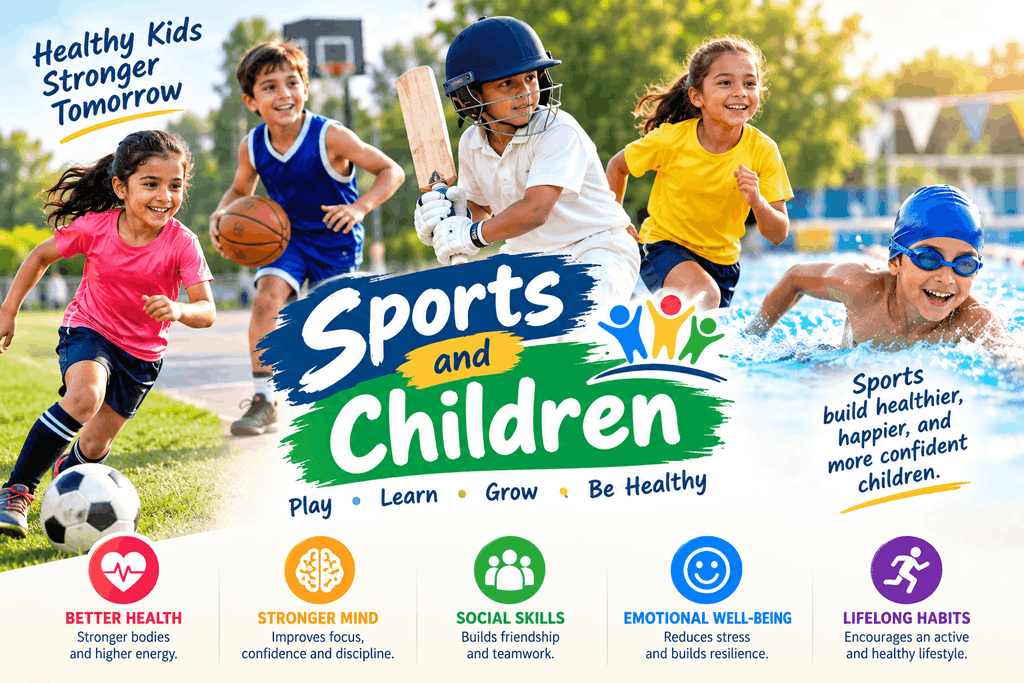
Participation in age-appropriate sports can provide children with opportunities to develop physical skills and social confidence.
Children can learn fundamental movements such as running, jumping, throwing, catching, and balancing through games and sports.
Sports can also introduce concepts such as teamwork, following rules, fair play, and perseverance.
Adults should create supportive environments that emphasize enjoyment, learning, and development rather than excessive pressure to win.
Children also need adequate rest, appropriate equipment, and supervision suitable for their age and activity.
Youth Sports and Education
Sports can complement academic development.
Students involved in sports learn to manage schedules, practice regularly, cooperate with others, and work toward goals.
School and university sports programs can also create opportunities for leadership and community involvement.
However, academic responsibilities and athletic participation should be balanced carefully.
The goal should be to support the student’s overall development rather than treating one area as more important than everything else.
Professional Sports
Professional athletes compete at the highest levels of their respective sports.
Professional sports require extensive training, coaching, nutrition planning, recovery, tactical preparation, and performance analysis.
Athletes often work with teams of coaches, trainers, medical professionals, nutrition specialists, psychologists, analysts, and other support staff.
Professional competition can provide entertainment for millions of fans and create economic opportunities for athletes and organizations.
At the same time, professional sports involve demanding schedules and significant physical and mental pressures.
Sports Training and Preparation
Training is an essential part of athletic development.
Training programs may include sport-specific skills, strength work, cardiovascular conditioning, flexibility, mobility, tactical practice, and recovery.
The appropriate training approach depends on the sport and individual athlete.
Rest and recovery are also important. Athletes need time for the body to adapt to training.
Nutrition, hydration, sleep, and appropriate workload management can all contribute to effective preparation.
Sports Nutrition
Nutrition plays an important role in athletic performance.
Athletes require sufficient energy and nutrients to support training, recovery, and normal body functions.
Carbohydrates, proteins, fats, vitamins, minerals, and fluids all have roles in nutrition.
Specific nutritional needs vary according to the athlete, sport, training intensity, body size, goals, and other factors.
Athletes with specialized needs can benefit from working with qualified nutrition professionals.
Sports Technology
Technology has transformed modern sports.
Wearable devices can track movement, heart rate, speed, distance, and other measurements.
Video analysis allows coaches and athletes to review technique and tactical decisions.
Electronic timing systems can measure performances with high precision.
Some sports use video review and tracking technologies to assist officials with decisions.
Technology can also improve fan experiences through live statistics, interactive broadcasts, digital ticketing, and online communities.
Data and Performance Analysis
Sports teams increasingly use data to understand performance.
Analysts can examine statistics related to player movement, scoring, passing, possession, shooting, workload, and other factors.
Data can help coaches identify strengths and areas for improvement.
However, statistics do not capture every aspect of sport. Leadership, communication, decision-making, confidence, and teamwork can be difficult to measure.
The most useful approach combines data with human observation and professional judgment.
The Importance of Fair Play
Fair play is an important principle in sports.
Athletes are expected to follow rules, respect opponents, and compete honestly.
Sportsmanship involves accepting both success and disappointment with respect.
Coaches, officials, athletes, and fans all contribute to the culture of a sport.
A competitive environment can still be respectful. Winning is one part of competition, but integrity and respect are also important.
Fans and Sports Communities
Fans are a major part of sports culture.
Supporters create traditions around clubs, teams, athletes, stadiums, chants, clothing, celebrations, and online communities.
Sports can connect people who might otherwise have little in common.
Friends and families may gather to watch important games, while communities can celebrate local teams and athletes.
Digital platforms have expanded these communities by allowing fans from different countries to communicate and share experiences.
Sports and the Economy
Sports contribute to economies through many different industries.
Professional teams employ athletes, coaches, medical staff, administrative workers, media professionals, security personnel, and other employees.
Major sporting events can also generate activity for hotels, restaurants, transportation providers, retailers, broadcasters, and tourism businesses.
Sports merchandise, sponsorships, advertising, media rights, and ticket sales are major parts of the sports business.
Local sports can also contribute to communities by creating opportunities for facilities, coaching, events, and recreational programs.
Women in Sports
Women’s participation in sports has expanded significantly across many disciplines.
Women compete professionally and recreationally in football, cricket, tennis, athletics, basketball, swimming, cycling, hockey, and numerous other sports.
Women’s sports have also gained increased media attention and audience interest in many markets.
Encouraging participation can provide opportunities for physical activity, competition, leadership, and professional development.
Creating safe and supportive environments is important for athletes of all genders.
Accessibility and Inclusive Sports
Sports should be accessible to people with different abilities and circumstances.
Adaptive sports provide opportunities for athletes with disabilities to participate in competitive and recreational activities.
Modified equipment, accessible facilities, coaching, and appropriate rules can help more people participate.
Inclusive sports programs can provide physical activity while creating opportunities for community participation and achievement.
The Future of Sports
The future of sports will likely involve greater use of technology, data, digital media, and innovative training methods.
Artificial intelligence may assist with performance analysis, scouting, scheduling, broadcasting, and other areas.
Virtual and augmented reality could provide new ways for fans to experience games and for athletes to practice certain situations.
Wearable technology may also become more sophisticated.
At the same time, the basic appeal of sports will remain familiar: competition, skill, teamwork, physical effort, excitement, and shared experiences.
How to Get Started With Sports
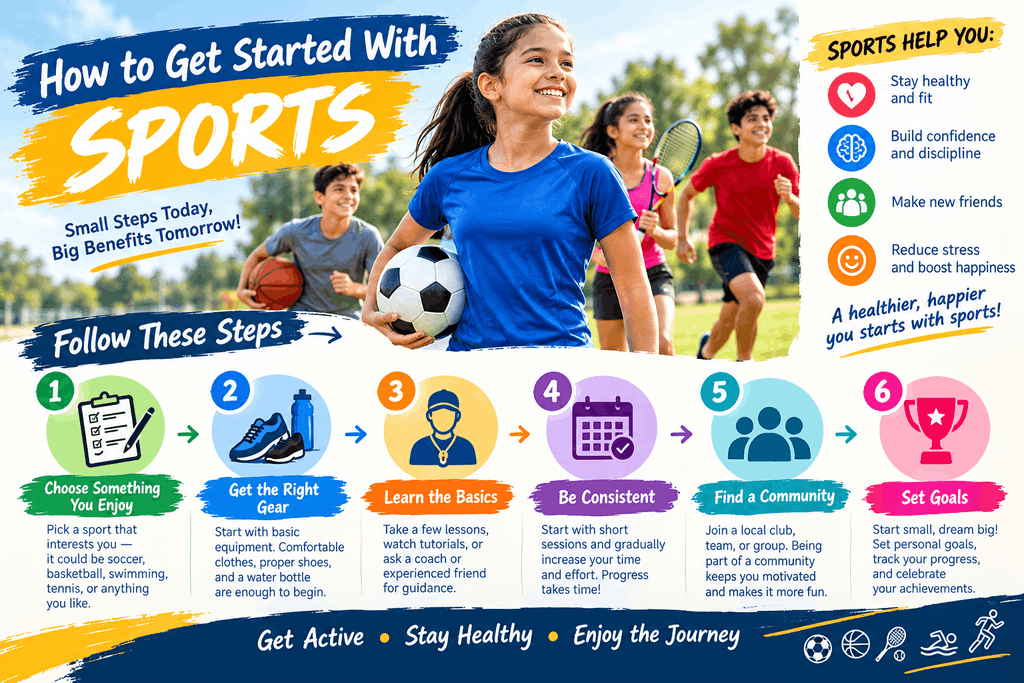
People who want to become more active can start with an activity they enjoy.
Beginners do not need to become highly competitive immediately. Walking, cycling, swimming, recreational football, badminton, tennis, or other activities can provide a starting point.
The most important factor is consistency.
New participants should increase activity gradually and use appropriate equipment.
Anyone with specific medical concerns or physical limitations should seek suitable professional advice before starting a new exercise program.
Conclusion
Sports are much more than games. They combine physical activity, skill, discipline, teamwork, competition, entertainment, and community.
From football and cricket to tennis, basketball, swimming, athletics, and countless recreational activities, sports provide opportunities for people of all ages and abilities to remain active and connected.
Technology is changing how athletes train, how coaches analyze performance, and how fans experience competitions. Yet the fundamental values of sports remain important: effort, practice, teamwork, respect, fair play, and perseverance.
Whether someone dreams of becoming a professional athlete or simply wants to enjoy a weekend game with friends, sports can provide valuable experiences.
The true value of sports is not measured only by trophies or scores. It can also be found in the friendships created, skills developed, challenges overcome, and communities brought together.
As sports continue to evolve, their ability to inspire participation, encourage healthy activity, create entertainment, and connect people is likely to remain an important part of society for generations to come.